

Price

Burn
--
Buyback
--
Dynamic
No
Claim
--
Raise Amount
$25.00M
Version 1
Announced: 29 Apr 2022
GAL (migrated to Gravity - G) Burn
Burn Data Not Available

Comprehensive Burn Analysis
Speed up your research game, get on Pro!
Real-time burn transaction data
Detailed burn metrics and analytics
Complete burn performance analysis
Complete your research flow all in one place
Trending Tokens


Token Information
Last updated
What is the GAL (migrated to Gravity - G) token vesting schedule?
GAL (migrated to Gravity - G) follows a vesting schedule with allocations to the Community, Marketing, Team, Seed Sale, Foundation, Strategic Sale 1, Advisors & Partners, Coinlist Public Sale, Ecosystem, Strategic Sale 2, Early Adopters Rewards and Launchpool. Most allocations are released through a cliff mechanism. The full unlock schedule extends into 2028.
When is the next GAL (migrated to Gravity - G) unlock?
The next unlock for GAL (migrated to Gravity - G) is scheduled for December 11, 2026, releasing 586.67K GAL (0.31% of released supply), worth about $206.83K, to Community.
How much GAL (migrated to Gravity - G) supply is currently unlocked?
As of today, approximately 187,730,000 GAL (migrated to Gravity - G) has been unlocked, which is 93.87% of GAL (migrated to Gravity - G)’s total supply. Float is 93.87% of max supply (excluding burned tokens). The remaining tokens are still locked and will be released according to the vesting schedule.
Is GAL (migrated to Gravity - G) vesting cliff or linear?
GAL (migrated to Gravity - G) uses cliff vesting, especially for Community allocations. This means tokens are released all at once after a set waiting period, creating a delayed but significant supply event.
What is the difference between GAL (migrated to Gravity - G) circulating and total supply?
The circulating supply of GAL (migrated to Gravity - G) is 127,749,331 tokens, the total supply is 200,000,000 tokens, and the max supply is 200,000,000 tokens. The total supply is all tokens that have been or will be created, including those that are still locked. The max supply is the max amount of tokens to ever be in circulation. Since no GAL (migrated to Gravity - G) tokens have been burned, the max supply is equal to the total supply.
What is GAL (migrated to Gravity - G)'s FDV (Fully Diluted Valuation)?
GAL (migrated to Gravity - G)’s FDV is $70,324,000 which reflects the market value if all 200,000,000 tokens were unlocked. This figure helps estimate long-term dilution risks.
How is GAL (migrated to Gravity - G) allocated across stakeholders?
The GAL (migrated to Gravity - G) allocation includes Early Adopters Rewards at 2.00%, Community at 20.00%, Seed Sale at 10.63%, Foundation at 10.00%, Strategic Sale 1 at 6.64%, Advisors & Partners at 6.23%, Coinlist Public Sale at 5.00%, Strategic Sale 2 at 3.50%, Launchpool at 1.50%, Marketing at 15.00%, Team at 15.00% and Ecosystem at 4.50%.
Has GAL (migrated to Gravity - G) price dropped after past unlocks?
Historically, GAL (migrated to Gravity - G) has shown medium volatility 7 days after the past unlock. The price impact depends on who receives the unlocked tokens and market conditions.
How can I track upcoming GAL (migrated to Gravity - G) unlocks?
Tokenomist provides an up-to-date vesting chart and unlocks monitor that shows upcoming unlocks for GAL (migrated to Gravity - G), with visibility for each allocation and amount.
Tokenomist Research
Explore moreResearch Insight
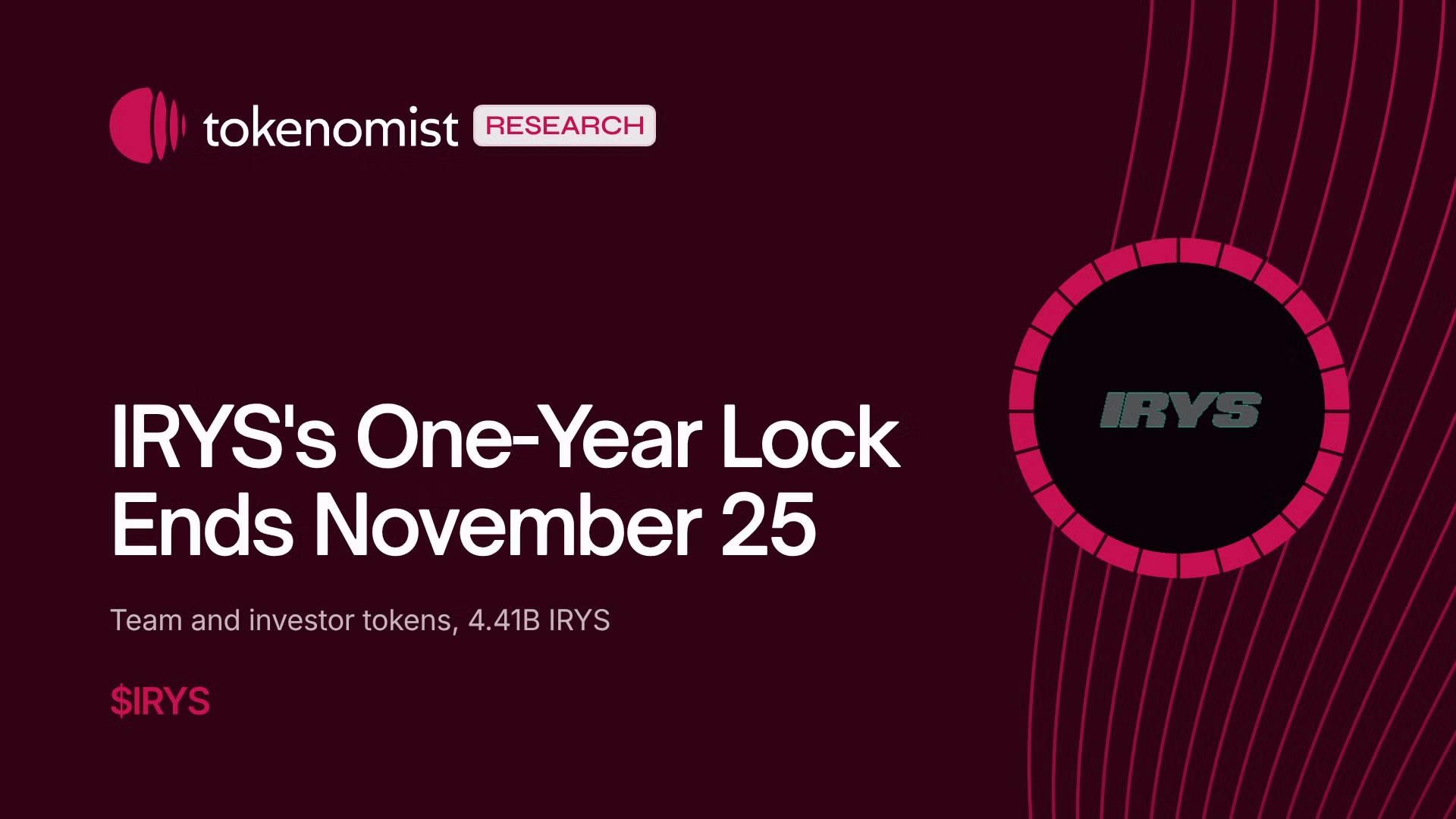
IRYS Team and Investor One-Year Lock Ends November 25, 2026
The one-year lock on 4.41 billion IRYS held by the team and investors ends on November 25, 2026. Tokenomist's schedule, built from Irys's whitepaper text and tokenomics post, releases 4.34 billion of them at 120.5 million IRYS a month from December 25, 2026, and 72 million to echo-round in

Nov 24, 2026
11 min read

Chawapat Peechapat · Nov 24, 2026
IRYS Team and Investor One-Year Lock Ends November 25, 2026
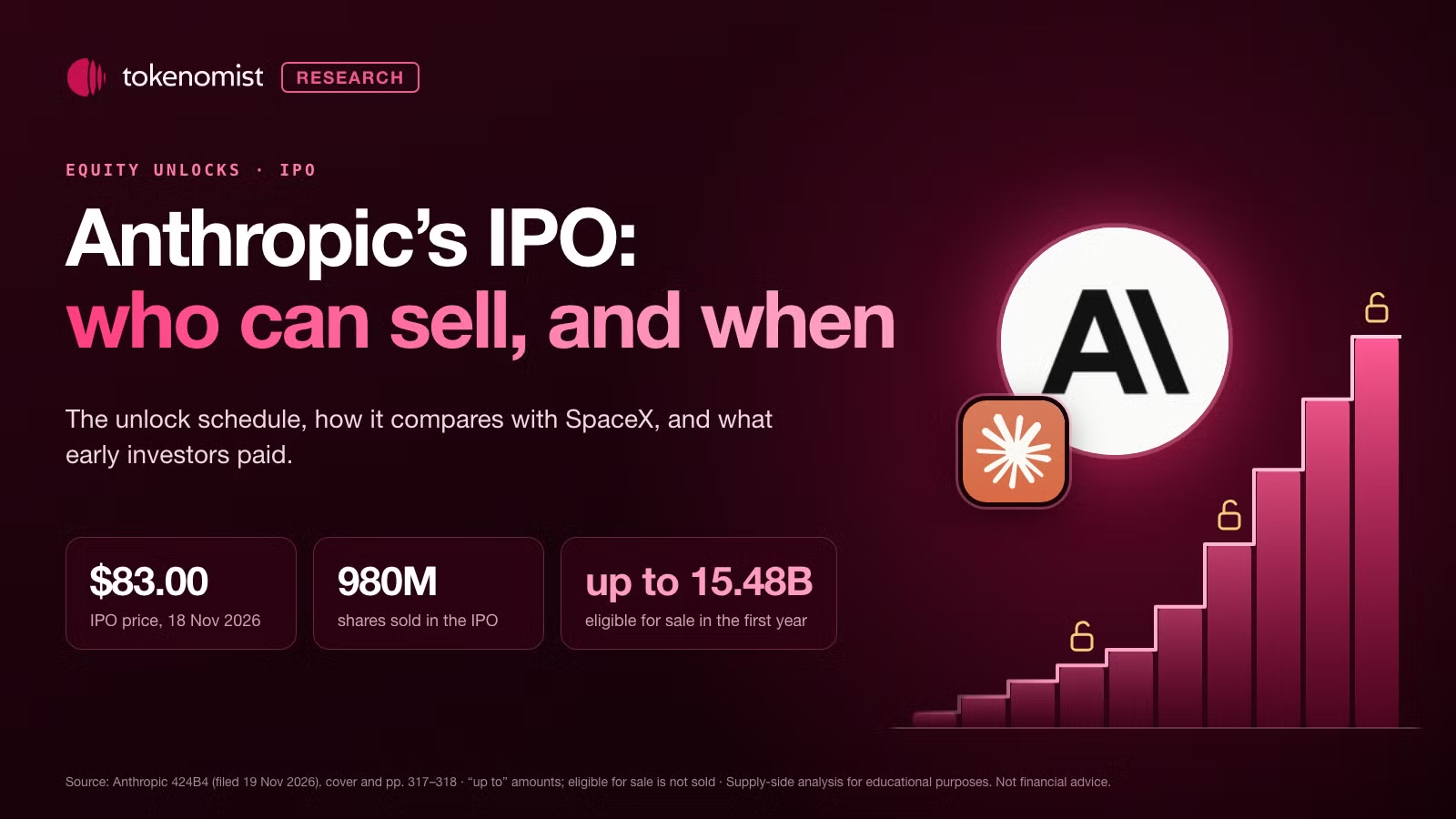
Anthropic's IPO: the unlock schedule, how it compares with SpaceX, and what early investors paid
Nov 23, 2026
6 min read
Natthaphong Saruasawan · Nov 23, 2026
Anthropic's IPO: the unlock schedule, how it compares with SpaceX, and what early investors paid


Tokenomist.ai provides a complete solution for supply-side tokenomics data. Analyze future token emissions, track vesting schedules, and compare standardized tokenomics and allocation across projects to gain actionable insights