Token Buyback
Token buybacks are how protocols use revenue to offset sell pressure, converting earnings back into demand for the native token. Tokenomist classifies every buyback event along three dimensions: Type (Buyback & Burn vs Treasury Buyback), Source (Revenue, Treasury, Protocol Fees, or External Funding), and Precision (On-chain Exact, Reported, or Estimated), so you can distinguish verified, sustainable programs from marketing announcements.
TradFi parallel: Like a corporate share repurchase program funded by quarterly earnings.
Key Takeaways
- 01Buyback & Burn permanently removes tokens from supply; Treasury Buyback retains them for future protocol use
- 02Tokenomist classifies buybacks along three dimensions: Type, Source, and Precision, enabling rigorous cross-project comparison
- 03Revenue-funded and Protocol Fee-funded buybacks are the most sustainable because they scale with protocol adoption
- 04On-chain Exact precision is the gold standard: Tokenomist can verify the purchase, source wallet, and destination on-chain
- 05Buyback impact scales with the ratio of annual buyback volume to market cap; 2-5% annual buybacks represent meaningful demand
- 06Sustained buybacks require stable, growing protocol revenue; buybacks alone cannot support price if underlying utility declines
How It Works
A token buyback occurs when a protocol deploys capital to purchase its own token from the open market. The purchased tokens are either permanently destroyed or retained by the project treasury for future use. Buybacks convert protocol earnings into direct buy-side demand, creating a deflationary force that benefits remaining holders.
Tokenomist organizes buyback events using a 3-dimensional taxonomy:
**Type dimension** distinguishes what happens to purchased tokens:
- Buyback & Burn means tokens are repurchased and immediately burned. This is the most holder-friendly variant because supply is permanently reduced. No tokens can re-enter circulation.
- Treasury Buyback means tokens are purchased from the open market by the project treasury through direct purchases. These tokens remain outstanding and could be redeployed later for incentives, compensation, or strategic investments.
**Source dimension** identifies where the capital originates:
- Revenue: operating income from the protocol's core business.
- Treasury: existing treasury holdings deployed for token purchases.
- Protocol Fees: on-chain fees collected by the protocol's smart contracts.
- External Funding: capital from outside sources, such as grants, partnerships, or raises.
The source matters because it determines sustainability. Revenue-funded and Protocol Fee-funded buybacks scale with protocol adoption. Treasury-funded buybacks draw down finite reserves. External Funding-dependent buybacks may not recur.
**Precision dimension** captures data reliability:
- On-chain Exact buybacks are verified through on-chain transactions and carry the highest reliability. Tokenomist can trace the purchase, the source wallet, and the destination (burn address or treasury).
- Reported buybacks are disclosed via public reports, blog posts, or governance proposals but lack full on-chain verification.
- Estimated buybacks are inferred from indirect data: for example, treasury balance changes or exchange flow analysis.
Tokenomist's Buyback Screener lets you filter and rank projects by buyback volume, type, source, and precision across the entire tracked universe. The Buyback Comparison tool places projects side by side, normalizing buyback data against circulating supply and market cap so you can evaluate the relative impact. The single-token Buyback Panel surfaces the complete buyback history for any tracked project, broken down by all three taxonomy dimensions.
Full dashboard live on Tokenomist
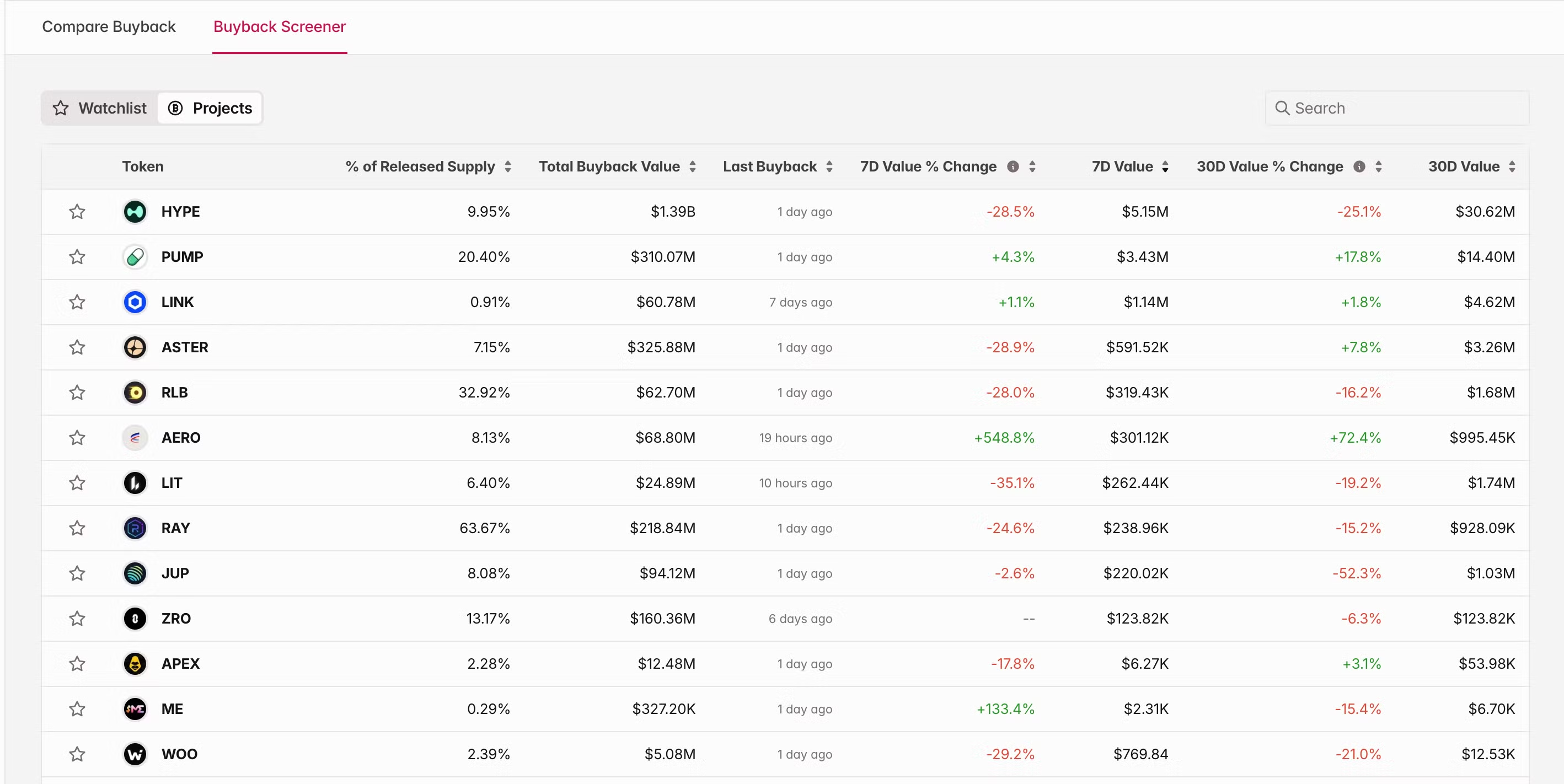
The Buyback Screener ranks live buyback programs by scale and recency: HYPE leads with $1.39B repurchased (9.95% of released supply), while RAY has bought back 63.67% of its released supply. Data as of August 2026.
Two value columns describe the same buyback and routinely disagree, so it is worth knowing which one answers which question. Spent Amount is the actual USD the project paid, available only where Tokenomist can identify the buyer address and read the purchase transactions, and shown as not available otherwise. Inflow Value is the token amount multiplied by the price at the moment those tokens arrived in the buyback wallet. Spent Amount is the better measure of committed capital, while Inflow Value is available more often and is the better measure of the size of the position acquired.
The Type axis has a third outcome the two-value split does not capture: buyback and redistribute, where purchased tokens are handed to stakers rather than burned or retained. Supply is unchanged, because the tokens re-enter circulation immediately. This is the case most likely to be misread from a headline. A program can advertise an aggressive buyback percentage while its token still runs materially positive annual inflation, because nothing was retired and the unlock schedule kept running underneath. When you see a buyback figure, establish which of the three outcomes it ends in before treating it as deflation.
Discretion is worth reading as its own dimension. A discretionary buyback is sized case by case and can quietly stop; a rules-based one is bound to a published formula, usually a fixed share of protocol revenue executed continuously unless governance votes to halt it. The distinction decides whether a holder can underwrite the bid or is trusting an announcement. Aave's move to route protocol and GHO revenue into an automated on-chain mechanism, replacing a discretionary weekly cap, is the archetype of that shift, and its purchases go to the ecosystem reserve rather than a burn address, which makes it a redistribute program rather than a burn.
Finally, size a buyback against what the vesting schedule releases over the same window, not against the market cap alone. Buybacks are flow-dependent and revenue-dependent; scheduled emissions are contractually fixed. When the buyback is smaller than the emission it is supposed to counter, it functions as a short-term demand injection rather than a change in supply trajectory. Supply offset expresses the deflation against supply; this comparison nets it against the unlocks, which is the question a holder facing a cliff actually has.
Real World Examples
Binance Coin Quarterly Buybacks
View →Binance allocates a percentage of quarterly exchange profits to repurchase and burn BNB. This systematic Buyback & Burn program, funded by Revenue, has removed a significant portion of the original supply over years, with governance-based decisions on buyback percentage.
dYdX v4 Buyback Program
View →dYdX v4 governance approved a buyback program funded by a percentage of protocol revenue, with tokens purchased on-chain and returned to the community treasury. This Treasury Buyback approach balances supply reduction with strategic flexibility for ecosystem development.
Curve DAO Revenue Sharing via Buyback
View →Curve directs trading fee revenue to repurchase CRV, which are then distributed to long-term lock holders (ve-token incentives) or burned. This dual mechanism aligns revenue with holder rewards and deflationary pressures.
Aave Risk Reserve Buyback Strategy
View →Aave uses a portion of protocol revenues and risk reserve funds to conduct periodic token buybacks, supporting AAVE price while improving tokenomics. Buyback decisions are voted on through Aave governance.
Lido DAO Treasury Deployment
View →Lido's treasury accumulates revenue from protocol fees and occasionally conducts buybacks of LDO tokens, which are held for strategic ecosystem investments or burned based on governance decisions.
Frequently Asked Questions
What is the difference between Buyback & Burn and Treasury Buyback?
Buyback & Burn means tokens are repurchased and immediately destroyed, permanently reducing supply. Treasury Buyback means tokens are purchased and held by the project treasury for future use. They remain outstanding and could be redeployed later. Tokenomist's Buyback Screener tags each event by type so you can filter for projects that permanently retire tokens versus those that accumulate them.
Does a token buyback guarantee price appreciation?
No. Buybacks create buy-side demand and can reduce circulating supply, but price depends on overall market demand. If protocol adoption or fee revenue declines, buybacks alone cannot prevent price decreases. Use Tokenomist's Buyback Panel to evaluate buyback volume relative to market cap and emission rates for a complete picture.
How do I evaluate if a buyback program is sustainable?
Check the Source dimension in Tokenomist's buyback taxonomy. Revenue-funded and Protocol Fee-funded buybacks scale with protocol activity and are the most sustainable. Treasury-funded buybacks draw down finite reserves. Then compare the annual buyback volume to annual protocol revenue: if a protocol spends 20% of revenue on buybacks, it is likely sustainable; if 80%+ goes to buybacks, growth may be constrained.
How reliable is the buyback data on Tokenomist?
Tokenomist assigns a Precision tag to every buyback event. On-chain Exact data is verified through on-chain transactions and carries the highest reliability. Reported data comes from public disclosures but lacks full on-chain verification. Estimated data is inferred from indirect signals. The Buyback Screener displays the precision level for each project so you can assess data confidence before making decisions.
Related Terms
token burnprotocol revenuetoken inflationsupply pressurecirculating supplytoken allocationemissionsupply offsetdigital asset treasury company
Track on Tokenomist
Supply-side analysis for educational purposes. Not financial advice. Verify assumption and precision labels on the relevant token page.

Tokenomist.ai provides a complete solution for supply-side tokenomics data. Analyze future token emissions, track vesting schedules, and compare standardized tokenomics and allocation across projects to gain actionable insights