Tokenomist.ai provides a complete solution for supply-side tokenomics data. Analyze future token emissions, track vesting schedules, and compare standardized tokenomics and allocation across projects to gain actionable insights
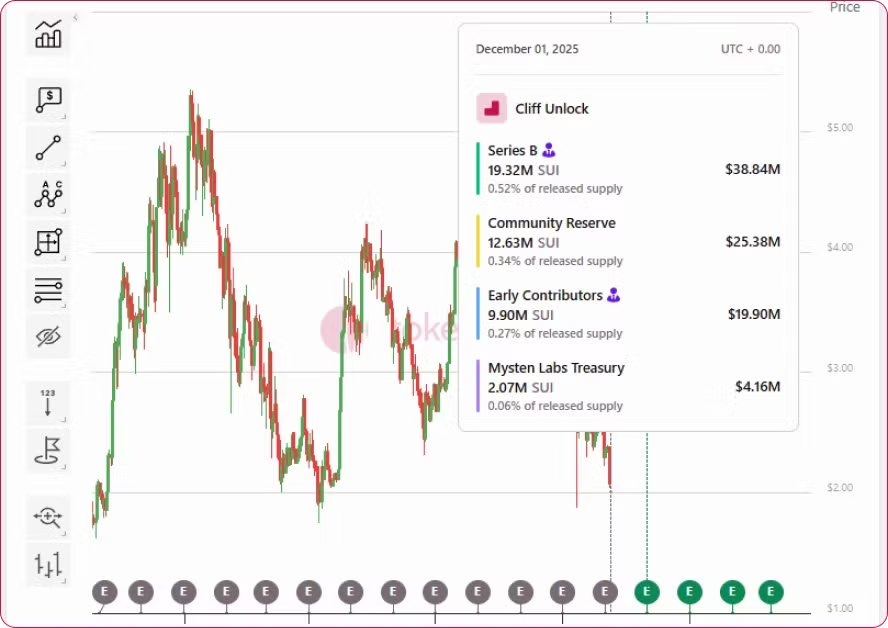
Status followed a vesting schedule with allocations to the Public Contributors, Community Reserve, Status Core Developers and Status Genesis Token Holders. Most allocations were released through a cliff mechanism. The unlock schedule ended in 2019.
When is the next Status unlock?
Status is fully unlocked.
How much Status supply is currently unlocked?
As of today, approximately 3,960,483,788 Status has been unlocked. The remaining tokens are unlocked.
Is Status vesting cliff or linear?
Status uses cliff vesting, especially for Public Contributors allocations. This means tokens are released all at once after a set waiting period, creating a delayed but significant supply event.
What is the difference between Status circulating and total supply?
The circulating supply of Status is 3,960,483,788 tokens and the total supply is infinite. The total supply is the max amount of tokens to ever be in circulation, including those that are still locked.
What is Status's FDV (Fully Diluted Valuation)?
Status's FDV is $76,182,154 which reflects the market value if 0 tokens were unlocked in the year 2035. This figure helps estimate long-term dilution risks for Status which has an infinite supply.
How is Status allocated across stakeholders?
The Status allocation includes Public Contributors at 44.07%, Community Reserve at 29.00%, Status Core Developers at 20.00% and Status Genesis Token Holders at 6.93%.
Has Status price dropped after past unlocks?
Historically, Status has shown high volatility 7 days after the past unlock. The price impact depends on who receives the unlocked tokens and market conditions.
How can I track upcoming Status unlocks?
Tokenomist provides an up-to-date vesting chart and unlocks monitor that shows upcoming unlocks for Status, with visibility for each allocation and amount.